


This story is part of our new series of audio features - also available as long reads - made possible by the International Press Institute. If you enjoy it, leave us a comment or reply to this email with your feedback — we’d love to hear what you think.
A man with deep brown eyes, wearing a blue uniform, walks into a small room and sits by the window. He looks older than his forty-eight years — thin, tired. We are in a camp for prisoners of war in western Ukraine, not far from Lviv, and the man fought in Ukraine as part of the Russian army.
But he is not Russian. He is an ethnic Uzbek from the Osh region in southern Kyrgyzstan, a Kyrgyz citizen. He is also one of more than 3,000 men from Kazakhstan, Kyrgyzstan, Uzbekistan, and Tajikistan who signed contracts with the Russian army, according to estimates by Hochu Zhit (“I Want to Live”), an initiative of the Ukrainian Ministry of Defence.
Every day in Alik’s life resembles the next. Since he was transferred to the camp, he has woken up before dawn for morning prayer at 6 am. The Ukrainian guards gave him a Quran, and he prays five times a day, like a devout Muslim.
“I can read namaz, no one’s stopping us. I’m grateful to them,” says Alik. “Nobody says anything. Nobody raises a hand against us. And they could — we are mercenaries. We came here, we invaded Ukraine, and it’s our fault.”
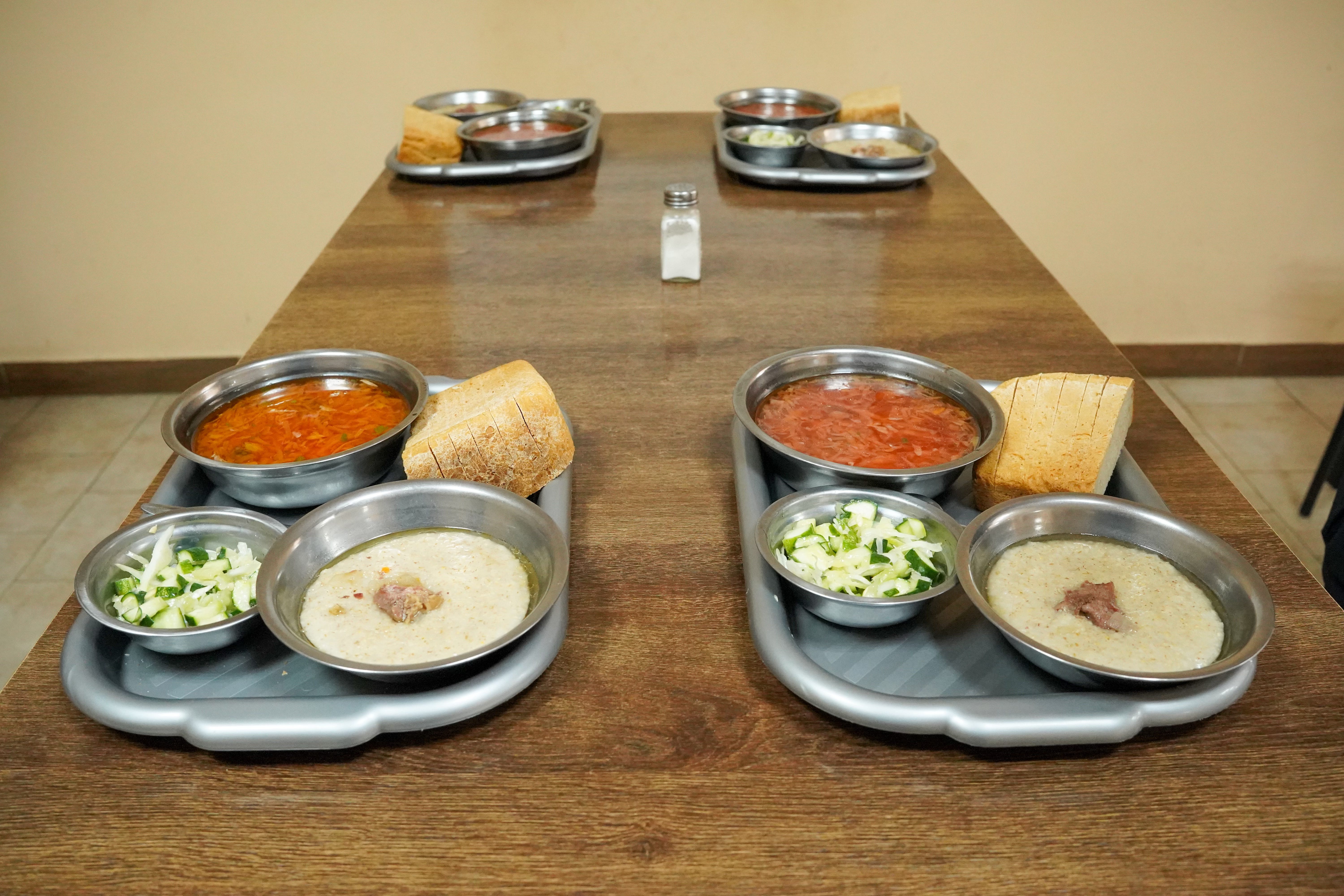
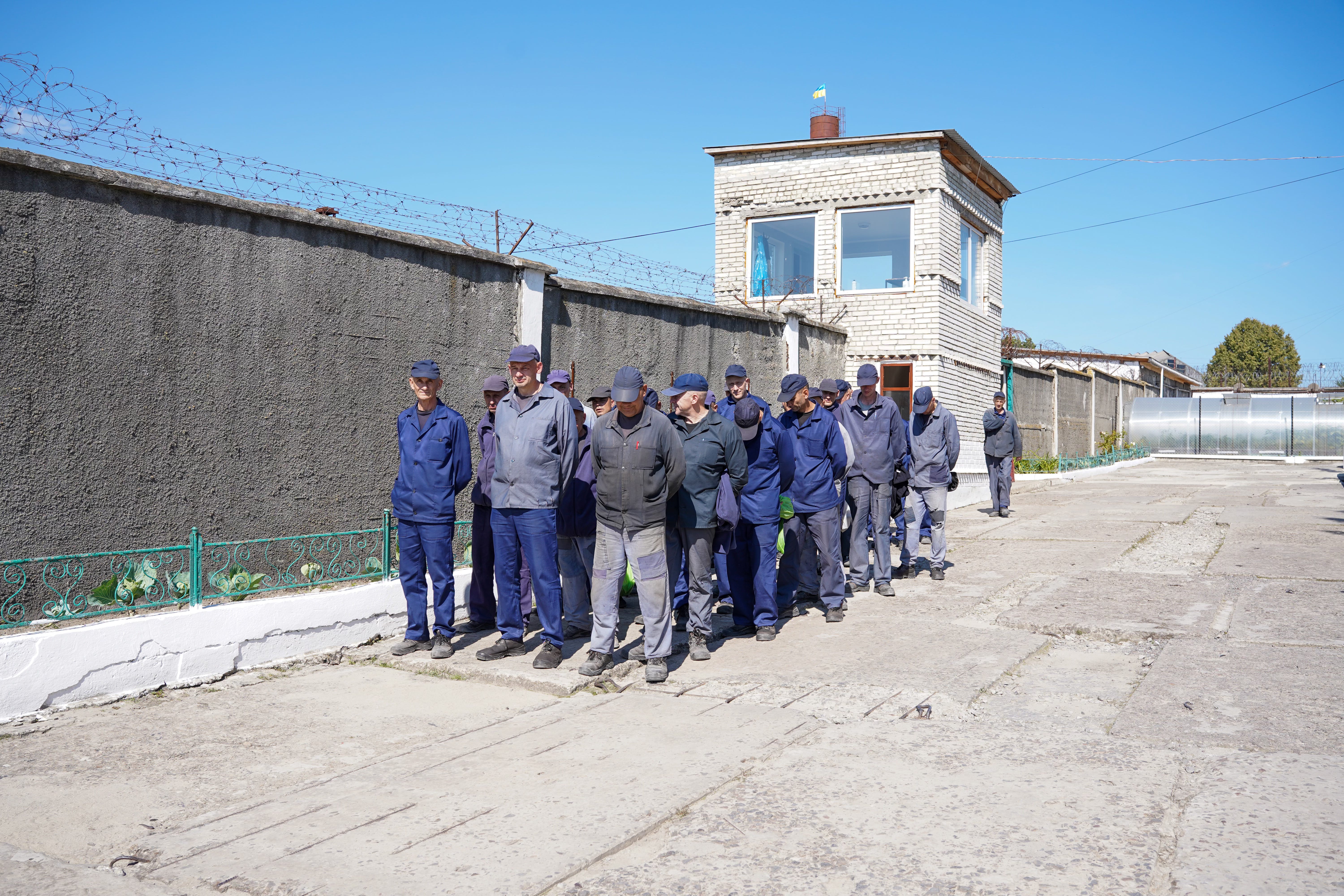
After prayer, Alik and the other prisoners go to breakfast, prepared by other inmates. They bake their own bread, distribute the food themselves, and clean after meals. The work keeps them busy.
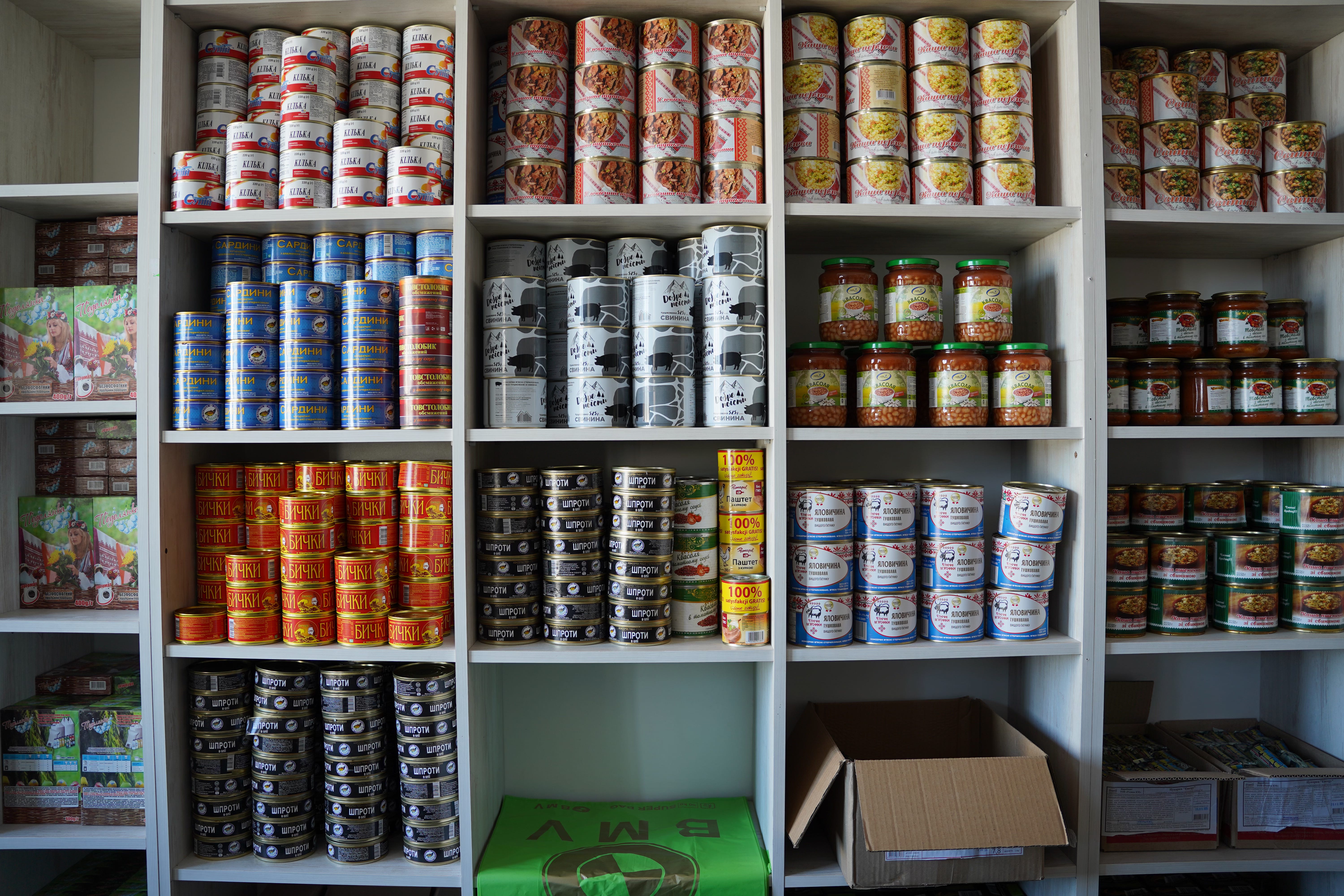
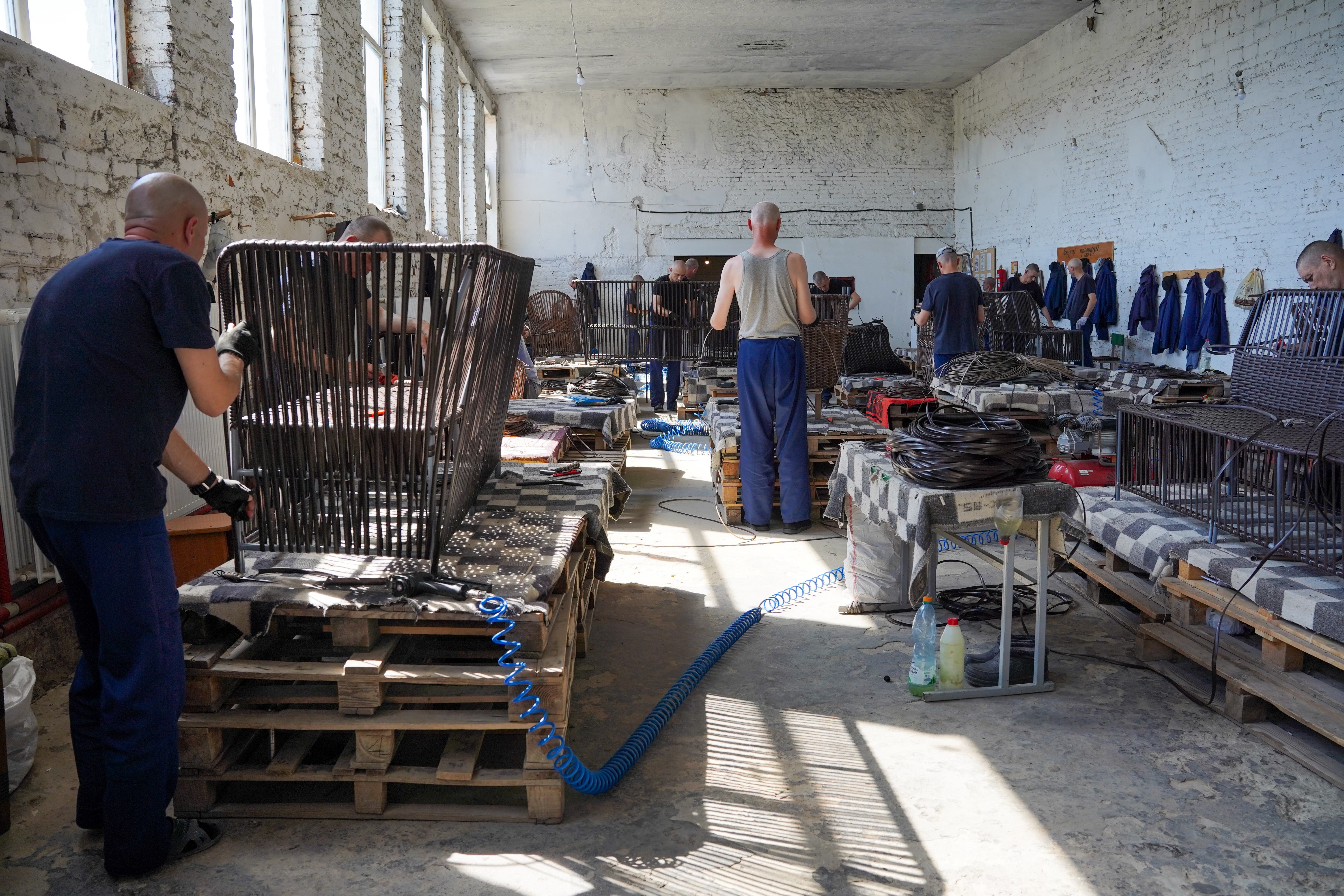
After breakfast, prisoners may go to work if they choose to: some make garden furniture, others weave protective netting — the work Alik chose. It helps him pass the long days in isolation and allows him to earn some money, which he can spend in the prison shop.
“We leave in the morning, work until lunch, and then again until 3:00. Then we can have some tea, sit down and watch TV,” he says.
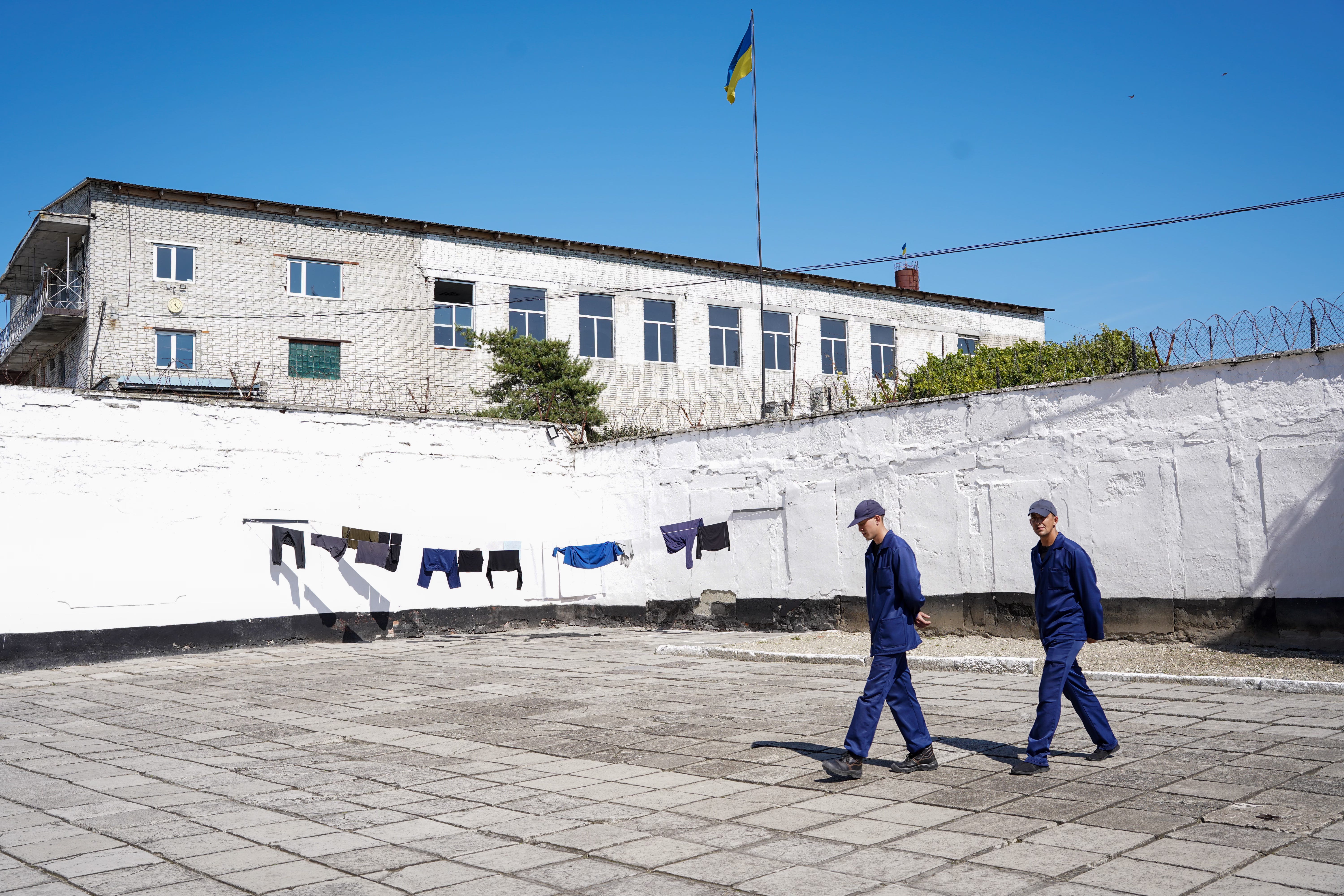
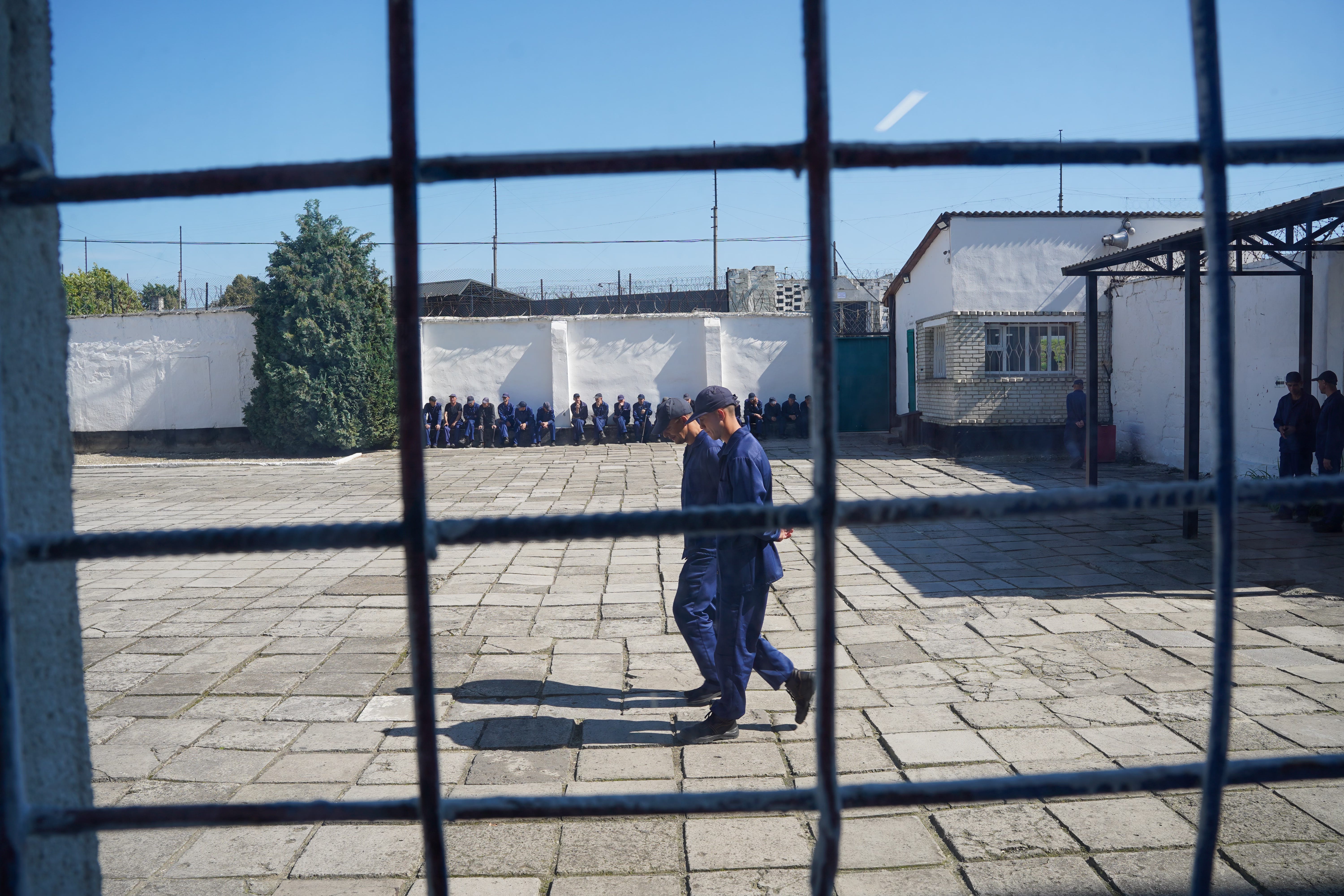
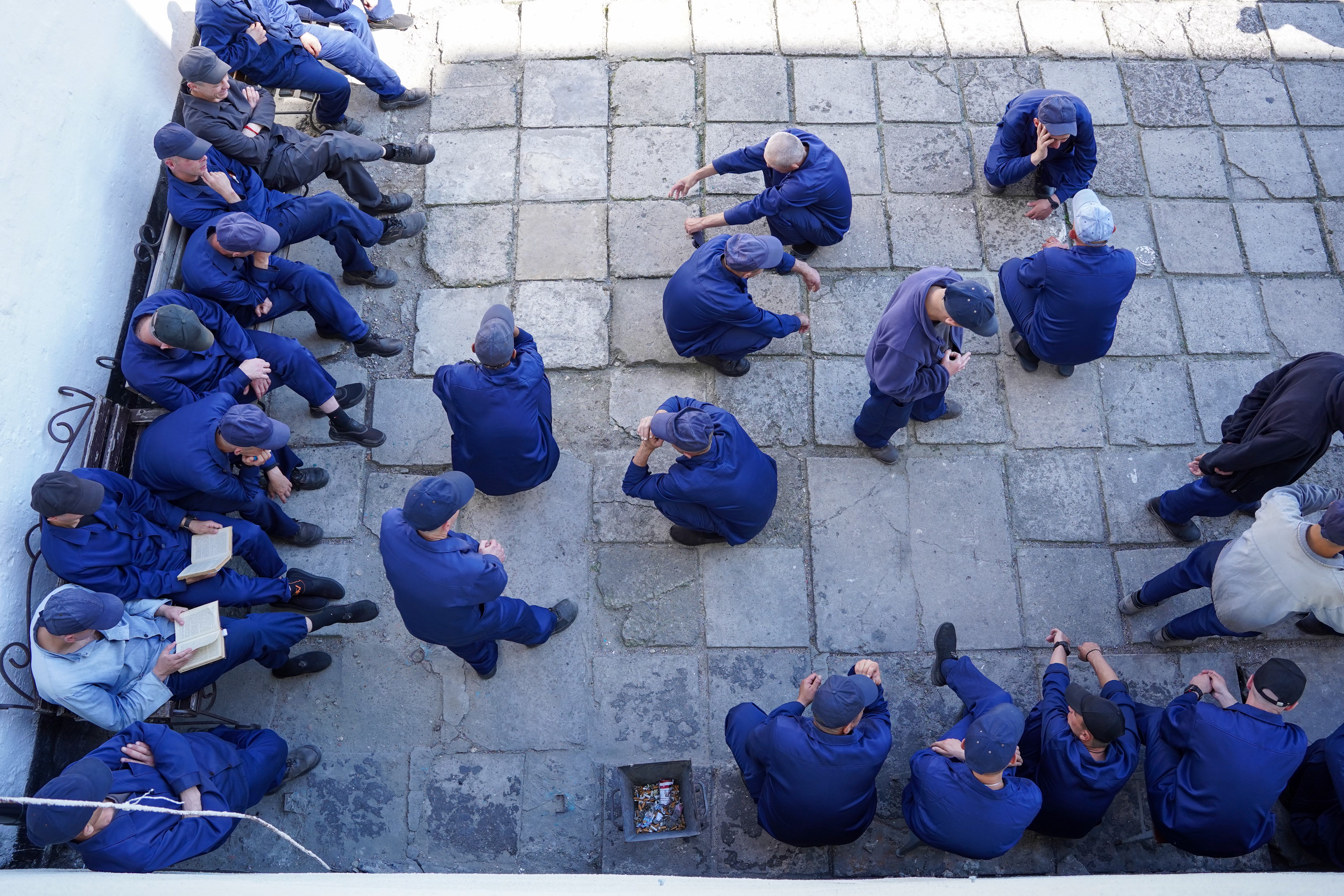
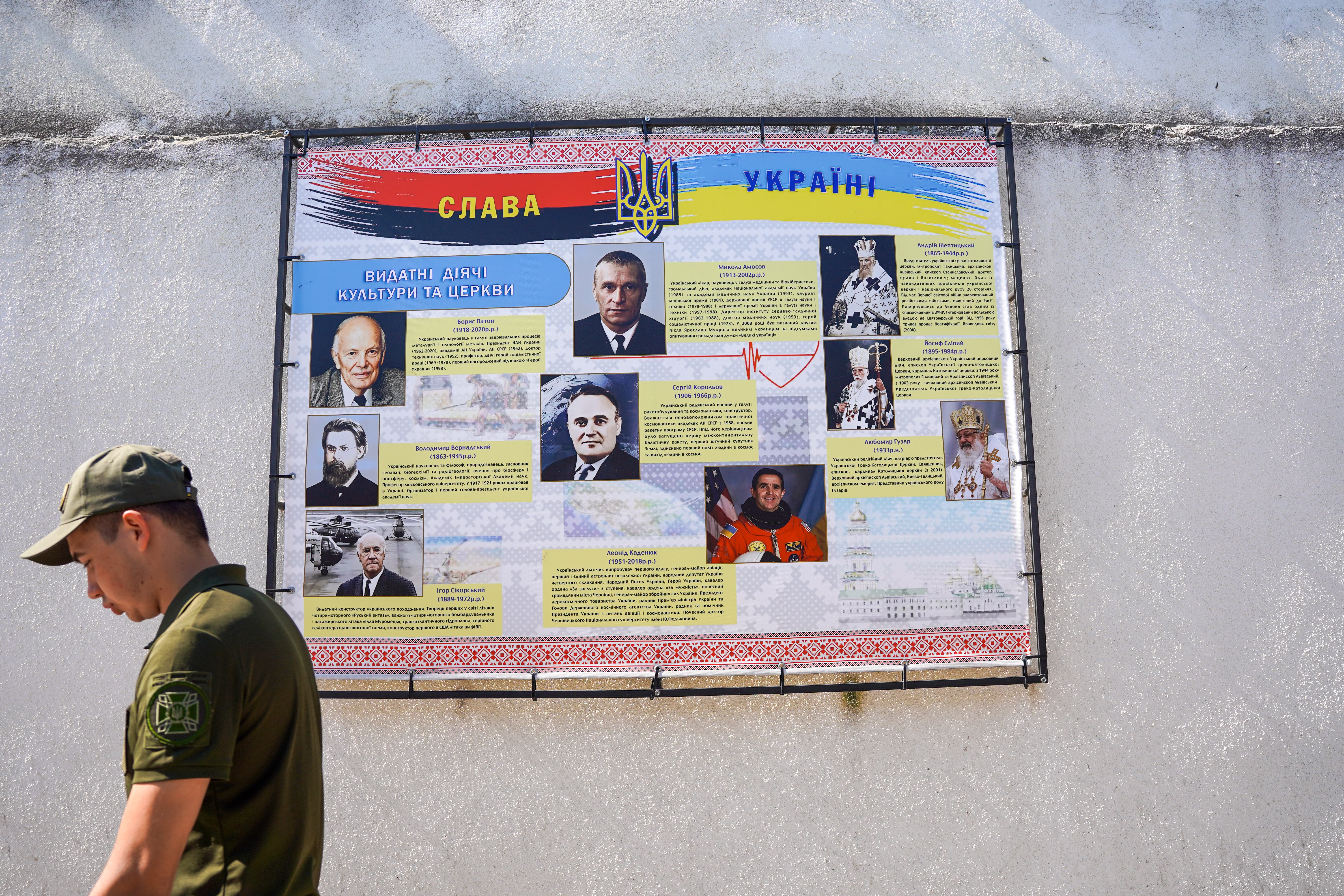
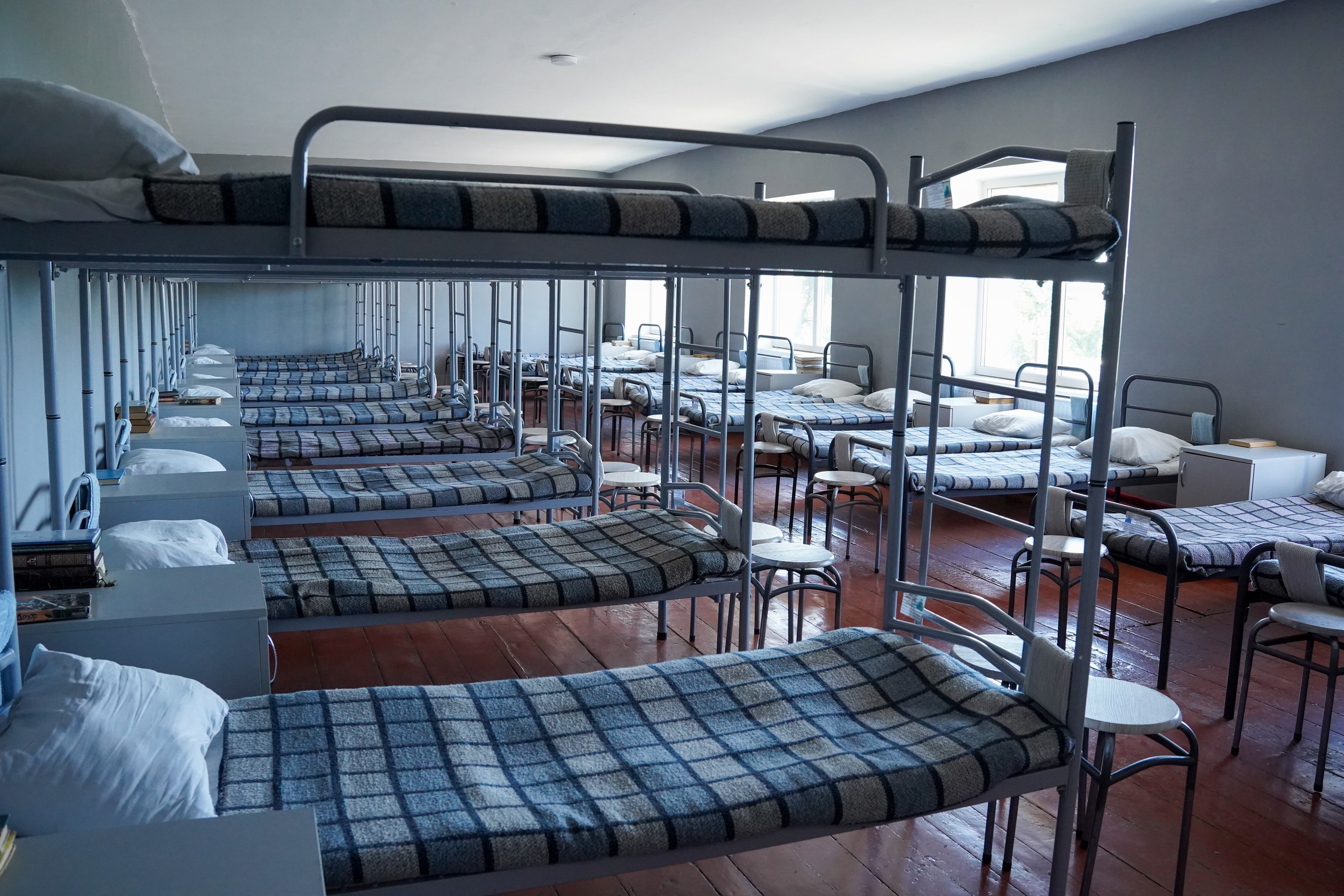
The prison does not seem heavily guarded. Some prisoners work in large halls overseen by only a few guards, others train with makeshift gym equipment or sit in their rooms. They have access to a library and a large yard. It is a hot day in late August, and everyone seeks shade. The complex is quiet and orderly.
Ukrainian authorities allow journalists into the camp once a month. There are no guards in the interview room. It is just the reporter, a table, and the prisoner.
But talking to POWs is ethically complicated. Their treatment is regulated by the 1949 Geneva Conventions, and its implementation overseen by the International Committee of the Red Cross, a humanitarian organisation mandated to protect victims of armed conflict, including prisoners.
“There’s an article that says that prisoners of war are protected from exposure to something called public curiosity. We read that as media reporting. For us, that means when talking to or interviewing prisoners of war, not revealing their identities,” says Pat Griffiths, an ICRC spokesperson in Kyiv.
“That’s for their safety and dignity, and also for the safety of their families back home. In practice, that means not showing faces and not using full names — that’s our recommended best practice.”
Importantly, prisoners of war cannot renounce these protections, even if they say they want to. They are in a state of coercion and, as Griffiths explains, it is impossible for them to give free consent to speak with a journalist. Therefore, for Alik’s safety, Turan Tales does not disclose his full name or his photograph.
The camp is large, and it would not be hard to get lost in its long corridors. The bathroom area and the bedrooms are clean, the lunches prepared by prisoners are simple but filling. Most of the prisoners are of Russian descent, but there are also men from Sri Lanka and, of course, Central Asia.
Before long, Alik and I sit across from each other in a small room — just the two of us, a table, and two chairs. Alik looks tense. He has given interviews before but has not grown used to speaking about his life to strangers.
He speaks heavily accented, broken Russian — a language he learned over years of living and working in Russia. He first went there in 2009 seeking better pay and opportunities for his family.
In the shadow of Moscow
After the collapse of the Soviet Union, the newly independent Central Asian states struggled economically. Small towns and villages were particularly affected. With Soviet factories and collective farms shutting down one by one, unemployment soared, pushing people to migrate. Russia, the former imperial centre, became the obvious destination.
Like many of his compatriots, Alik initially travelled seasonally and returned periodically to rest in the familiar comfort of his home village. In 2022, he moved to Turkey, but two years later decided to settle in Russia permanently, taking with him his wife, Nargiza, and their three sons.
Until recently, his life resembled that of many Central Asian migrant workers. He worked as a taxi driver and security guard in Khabarovsk, more than 8,000 kilometres east of Moscow, near the Chinese border. He worked hard to support his family.
“I worked in Russia with my wife. Because there were no jobs in Kyrgyzstan, I came here. I worked as a taxi driver, and my wife worked in a store,” Alik says. “My documents were in order. I had a residence permit for a year, a propiska. I lived legally, paid taxes, worked every day. I was doing well.”
He insists life was good, but the reality for most Central Asian migrants in Russia is more complex.
“Some of the Central Asian fighters admit that they were treated poorly in Russia, that they were discriminated against, but there are also quite a few who say that life in Russia is wonderful, and that’s why they need a Russian passport — that no one discriminates against them,” says Natalia Sadykova, a Kazakh journalist based in Ukraine who has extensively covered Central Asians fighting in Russian forces.
She knows the reality is different. She recalls being called various racist slurs as a child whenever she visited her grandmother in Russia.
“I experienced discrimination myself. I grew up in multicultural Kazakhstan, where in school we had Kazakhs, Russians, Ukrainians, Koreans, Germans. I’ve never judged people by nationality. And when I encountered this in Russia as a child, I was shocked, of course. And it hasn’t gone anywhere. We see it on social media all the time.”
Migrant discrimination in Russia includes racial profiling, arbitrary police checks, raids, and xenophobic attacks. According to a Human Rights Watch report published in March, after the 2024 Crocus City Hall attack attributed to Central Asians, harassment worsened.
Kyrgyz citizens, like Alik, are members of the Eurasian Economic Union and do not need patents — special work permits required from Uzbeks and Tajiks. But this does not shield them from exploitation. Many still work informally without contracts or protections, left vulnerable to extortion, deportation, and abuse.
Despite the challenges, millions continue to migrate. According to the 2025 report by the International Centre for Migration Policy Development, about 3 million Central Asians live and work in Russia at any given time. Remittances form a significant share of GDP: around 45 per cent in Tajikistan, 24 per cent in Kyrgyzstan, and 14 per cent in Uzbekistan.
And conditions have worsened.
In 2024, Russia created a registry of “controlled persons,” restricting access to key services. Some migrants on the list had bank accounts blocked. Police gained expanded powers to deport migrants without a court order, and 86,000 foreign nationals were detained and deported in the first half of 2024 — double the previous year.
New regional bans restrict migrant employment in sectors such as education, transport, catering, and public services. Migrants from visa-free countries, including Central Asian states, must install the “Amina” app, which tracks their location. Failure to do so can result in being listed as a “controlled person.” Recent rules also require foreign children to prove Russian-language proficiency to attend public school.
Sticks and carrots
As life became more restrictive, many migrants considered applying for Russian citizenship. In September 2022, amid an urgent need for new recruits for the war in Ukraine, the Russian parliament passed a law allowing foreigners who serve at least one year in the Russian army to apply for citizenship.
But there were harsher methods to convince Central Asians to join the war effort too.
“The majority of Central Asian mercenaries are being tricked by Russians because their main intention is to go to Russia to work, to earn money, to provide for their families. And of course, Russia uses that and tries to trick them, to force them to sign a contract with the Russian army,” says Petro Yatsenko, press secretary of the Coordination Headquarters for the Treatment of Prisoners of War in Ukraine.
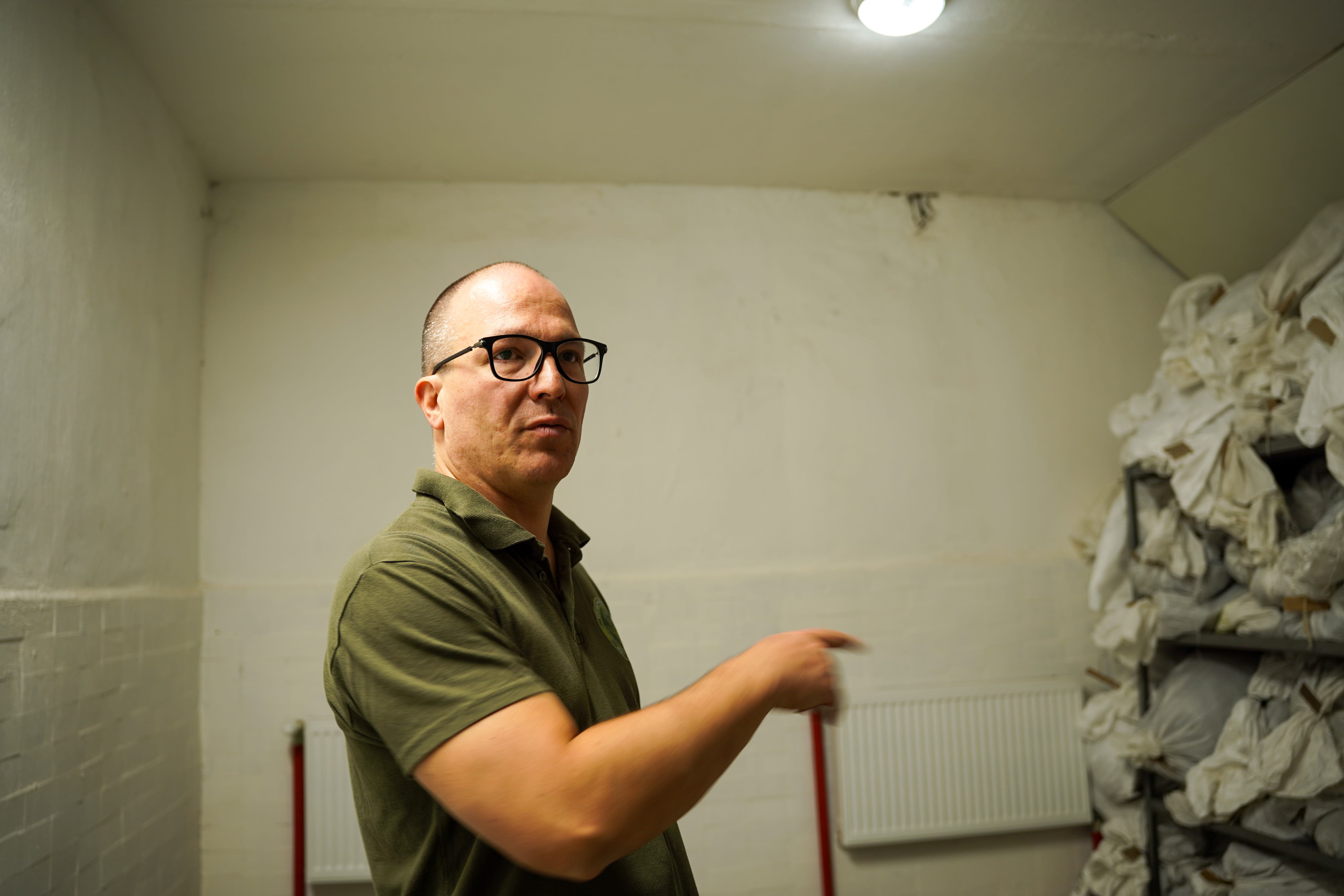
“Some of them sign contracts without reading them. But in general, they were promised good money — up to $2,000 or more per month — and of course citizenship.”
Natalia Sadykova agrees.
“Most of them say they’re told they’ll do support work, that they won’t even go to Ukraine, that they’ll be stationed in some unit in the Rostov region. They’re lied to at every turn to force them to sign. Most of these people don’t watch Russian television because they don’t watch anything,” she says.
“Because they have no rights in Russia anyway. They’re second-class citizens there, holding passports from their home countries. And they all believe a Russian passport will give them more opportunities.”
Alik says that Khabarovsk police tricked him into going to war. A few years earlier, he had purchased a fake driver’s licence — a mistake he admits. Earlier this year, after a car accident, the police discovered the forgery.
“They told me: either go to Ukraine, or we’ll arrest you. I chose to come here,” he says. “The car that hit me cost a fortune. It was my fault. And I didn’t have insurance. I don’t have this kind of money — I work hard, I have three children, and I have to pay for our flat. I had no choice, so I came here.”
Yet he admits that citizenship was also a major motivation.
“My sons need documents. They go to boxing training, and they’re told: ‘you can’t go, you’re not citizens.’ That’s why I came, for the passport.”
His wife opposed the decision, but it was too late. On 28 April 2025, he arrived at a training camp near the Ukrainian border. After 15 days he was sent to the front. Since then, he has called his wife only three times from other people’s phones. His own was confiscated by his Russian commander. After seeing what war was like, he called her one last time to say goodbye. A few days later, around two months into fighting, he was captured.
“They captured me in some village around Kharkiv. I don’t know — I’ve never been to Ukraine. I arrived there at night. They sent us to the forest,” he says. “I saw everything. When we wanted to withdraw, the drones came. They threw a grenade at us. I lost consciousness. I bled a lot. When I opened my eyes, I was already captured.”
He claims that before coming to Ukraine, he did not know much about the war or the situation at the front.
“I heard that there’s a war going on, a war with drones, kamikazes, the Babaykas — but I didn’t imagine it would be like that. People are dying. I didn’t imagine that,” he says. “It stinks up there, corpses lying around. They should be buried. Flies and worms are eating them.”
After the attack, Alik was wounded, and the Ukrainians took him to hospital. When he recovered, they transferred him to the Lviv camp. When he spoke to Turan Tales in late August, he had been there for less than two months.
He regrets joining the Russian forces. He still has no citizenship. His bank card with his salary was confiscated by the Ukrainians, and his wife is left alone with three sons. He wrote her a letter but doesn’t know if she received it.
The three waves
Central Asians have various motivations for joining the Russian army — and these have changed as the war has ground on.
“The first wave of recruitment of Central Asians began in March 2022 and continued until autumn that year. These were mostly people who went on their own initiative, including some from Kazakhstan. These were people who supported Putin and his war. They really believed they were going to fight fascists,” says Lukpan Akhmedyarov, a Kazakh journalist and YouTuber.
“The second wave consisted of people who were also subject to Russian propaganda, but that wasn’t enough to drive them to war. Money was. Russian propaganda began actively exploiting this theme — that everyone who went to war would receive several million Russian roubles, that the war would end quickly, and you’d come back with money.”
“And then, from the end of 2023 and the beginning of 2024, and to this day, there is the third wave. These are those who went to war under duress, deception.”
Methods of coercion include fabricated criminal charges and physical intimidation. Alik, who says he was coerced, regrets everything.
“I would have never come here, I would have never left my family, if I knew what it was like. I saw so many corpses, so many lives lost,” he told Turan Tales.
Under the Geneva Conventions, prisoners of war remain detained until the end of the war. Some are exchanged, but Alik said none of the Central Asians he met had been. A Tajik prisoner who has been imprisoned since 2023 said that so far no Central Asian has been exchanged.
Yatsenko confirmed a few had made it into exchanges but “not many.” Sadykova believes Central Asians are not a priority for Russia.
“Russia doesn’t need citizens of Central Asia. They don’t include them in exchange lists. They have no interest in taking them back. They prioritise their own citizens — Russians by nationality — whom they return as part of these exchanges,” she says.
Those who are not claimed back by Russia have limited options. Returning home may mean prosecution for mercenarism — though in Uzbekistan judges are often lenient, giving house arrest or non-custodial sentences. According to the Kun.uz daily, one man received a five-year prison sentence, similar to mercenaries tried in Kyrgyzstan and Kazakhstan.
People like Alik, shaped by poverty and limited opportunities, often cannot choose freely. Migration becomes a necessity, and vulnerability exposes them to coercion. They seek better lives for their children but rarely escape marginalisation.
Alik’s wife, Nargiza, did not know that her husband had been captured. She found out only after she was contacted by Turan Tales.
“Of course, it was a bad decision. He shouldn’t have gone there. When we found out he’d been captured, we were worried. Mom even started crying. We don’t know what they do to them in captivity,” says Bek, 16, Alik and Nargiza’s oldest son.
“Since he left, because of financial problems, things have gotten a little worse. Bad, you could say. But my uncle helps us out, and my mom is working, and I’ll start earning money soon too. So that’s how it is. Things have changed for the worse.”
“My mom, my uncle, and I work in the meat department. You could say we’re butchers. I always help out at my uncle’s place. And Khabarovsk is good, I don’t want to leave. I already have friends here; I’ve made some over the past three years. So everything is just fine here.”
Bek says they have not received any money from the state. Alik was meant to transfer his salary to Nargiza’s account when he got a chance, but the bank card is now gone. They also don’t know if they would receive citizenship.
“My mom tried to persuade him, cried, and all that. But, as they say, a person does his own thing. They bought him a bus ticket on Saturday, on Sunday he said goodbye, and by Monday he was already flying out,” he says.
“And then he just wanted to get a passport, so he went. He thought the war was a piece of cake, at first. Of course we were upset and wanted to keep him. We tried to talk him out of it, but he’s too stubborn, so he went.”
As it turned out, Alik was never blackmailed by the Russian police. There was no fake licence ultimatum and no arrest threat.
“Mom and Dad wanted to turn on the VPN, they went into the app, and an ad popped up. It said, ‘you can go to war.’ There was a number. They called it and found out that Dad could go to war. He was overjoyed and signed up,” Bek explains.
“Of course, no one forced him. He went there for us. He wanted us to go to a military school — and to get there, you need citizenship. So you could say he went to get citizenship for us.”
It is unclear why Alik lied. Perhaps he thought the truth would make him look worse than telling a story about a fake driver’s licence. Perhaps he hoped appearing as a victim would help him in captivity. But this, we will never know.
Daniel Berger, the director of Someone Else’s War, a documentary released last year, believes that to address the problem of Central Asians joining Russian forces, it is essential to address the root causes of the continuing imbalance of power between the region and its former imperial centre.
His film follows the families of two Kyrgyzstanis who died in the first days of the full-scale invasion. They both joined the army voluntarily and had Russian citizenship, but were born and raised in Kyrgyzstan.
“The thought that has haunted me is that these guys might still be alive if the economic situation in Kyrgyzstan had started improving ten years ago. Their parents wouldn’t have gone away to work, and then they wouldn’t have been drafted into the Russian army,” he says.
“The second thought that couldn’t leave me was that we need to develop the Kyrgyz language and Kyrgyz culture in Kyrgyzstan. Because this is what makes a country truly independent. We need to understand that we aren’t just a former colony or some sort of underbelly of Russia.”
Daniel has begun to see a light at the end of the tunnel. More than three decades after the fall of the Soviet Union, he thinks Kyrgyzstanis — and other Central Asians — are finally beginning to see themselves as independent from Moscow.
“We must rely on our own strength. No one will give us any recipe for happiness. But for this, the economy is secondary. The first is self-awareness. We need to see ourselves as an independent, strong country, where people can live comfortably and safely without having to leave for work,” he says.
“And I feel that this time is coming.”
This story was supported by:


