


Hi all,
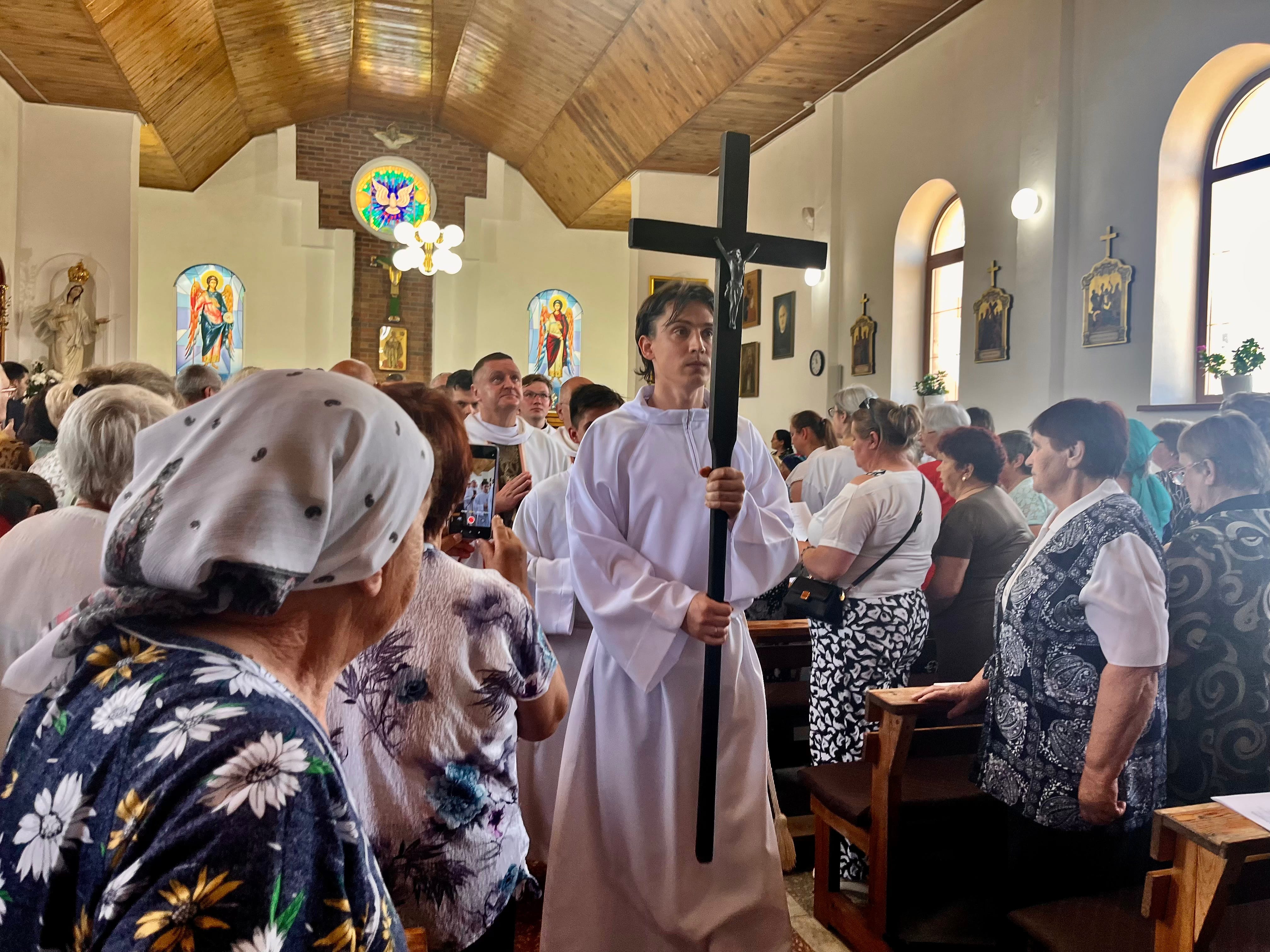
In late June, my guest today and I travelled to Oziornoye, a village in northern Kazakhstan. It was a special occasion: the 90th anniversary of the deportation of ethnic Poles from the eastern borderlands of the Soviet Union to Kazakhstan. Oziornoye is a tiny village with a Catholic church and a small lake. Legend has it that during the famine of the 1930s, the Virgin Mary saved the local Poles from starvation when fish suddenly appeared in the lake.
The celebrations, which included a Holy Mass and speeches by local and Polish officials, were touching, but for me also a little foreign. I was born in Poland and spent many years living there, and the version of Polishness I saw that day was not what I was used to. Singers wearing traditional Kraków dresses sang what they believed were famous Polish songs, children walked around waving Polish flags, and nuns clapped along to the music. In the back of the church, a yurt had been erected with an icon-shaped altar showing an image of the Kazakh Virgin Mary and Jesus.
It did not feel familiar. It made me wonder: what exactly has the experience of Polish deportees in Kazakhstan been like?
Today, we will talk about that with Ivan Sokolovskiy, an expert on the subject. Ivan is a PhD candidate in Eurasian Studies at the School of Sciences and Humanities at Nazarbayev University. He previously completed an MA degree with a specialisation in Holocaust and Totalitarian Systems at Jagiellonian University in Kraków, and a BA with a specialisation in Kazakh history and language at Moscow State University.
I hope you will enjoy this one.
Have a lovely end of the week!
— Agnieszka


